
Does Sunscreen Block Vitamin D?
If you have ever heard someone say, “I don’t wear sunscreen because I need vitamin D,” you are not alone. It is a common concern and a reasonable question.
Sunscreen is useful for helping to protect your skin from harmful UVA and UVB rays that can cause sunburn, premature aging, and skin cancer. At the same time, vitamin D plays an important role in bone health, immune function, and overall wellness. So it is fair to ask whether wearing sunscreen prevents your body from making vitamin D.
Let’s break it down in a simple way.
How Vitamin D Is Made By The Body
Your body produces vitamin D when your skin is exposed to UVB rays from the sun. That exposure triggers a process in the skin that ultimately results in vitamin D being activated by the liver and kidneys.
Sunscreen works by reducing how much UVA and UVB radiation reaches your skin. Because UVB rays are involved in vitamin D production, it is true that sunscreen can reduce the amount of UVB that penetrates the skin.

What Actually Happens in Real Life
Multiple studies have shown that people who regularly use sunscreen are still able to maintain healthy vitamin D levels.
Research published in the British Journal of Dermatology found that regular sunscreen use does not prevent the body from maintaining healthy vitamin D levels when used in real world conditions. The study supports the idea that people can protect their skin from UV damage without significantly impacting vitamin D status.
In practical terms, wearing sunscreen does not automatically lead to vitamin D deficiency.
Other Factors Matter More Than Sunscreen For Vitamin D
Vitamin D production depends on many factors beyond sunscreen use, including:
- Time of day
- Season
- Geographic location
- Skin tone
- Amount of time spent outdoors
During winter months or in higher latitudes, the sun’s angle is lower and UVB rays are weaker even when you spend time outside. People with darker skin tones also need more UVB exposure to produce the same amount of vitamin D.
Because of these variables, many people rely on diet and supplements, not sun exposure alone, to maintain adequate vitamin D levels.
How to Maintain Healthy Vitamin D Levels
Most adults need approximately 600 to 800 international units of vitamin D per day, though individual needs vary. Older adults, people with darker skin, and those with limited sun exposure may require more.
Common ways to support healthy vitamin D levels include:
Limited sun exposure
Everyday outdoor activity can contribute to vitamin D production without intentionally skipping sun protection or risking sunburn.
Food sources
Vitamin D is naturally found in fatty fish such as salmon, tuna, and mackerel. It is also present in mushrooms, egg yolks, and fortified foods like milk, cereal, and orange juice.
Supplements
Vitamin D supplements are widely available and can be helpful for people with limited sun exposure. Always consult a healthcare provider before starting supplements, since excessive intake can be harmful.
The Bottom Line On Vitamin D and Sunscreen
Wearing sunscreen does not mean you are sacrificing your vitamin D levels. Protecting your skin and supporting your overall health can and should work together.
Sun damage is cumulative, and skipping sunscreen increases the risk of premature aging and skin cancer. Vitamin D, on the other hand, can be safely supported through diet, supplements, and normal daily sun exposure.
Sun Protection You Can Feel Good About
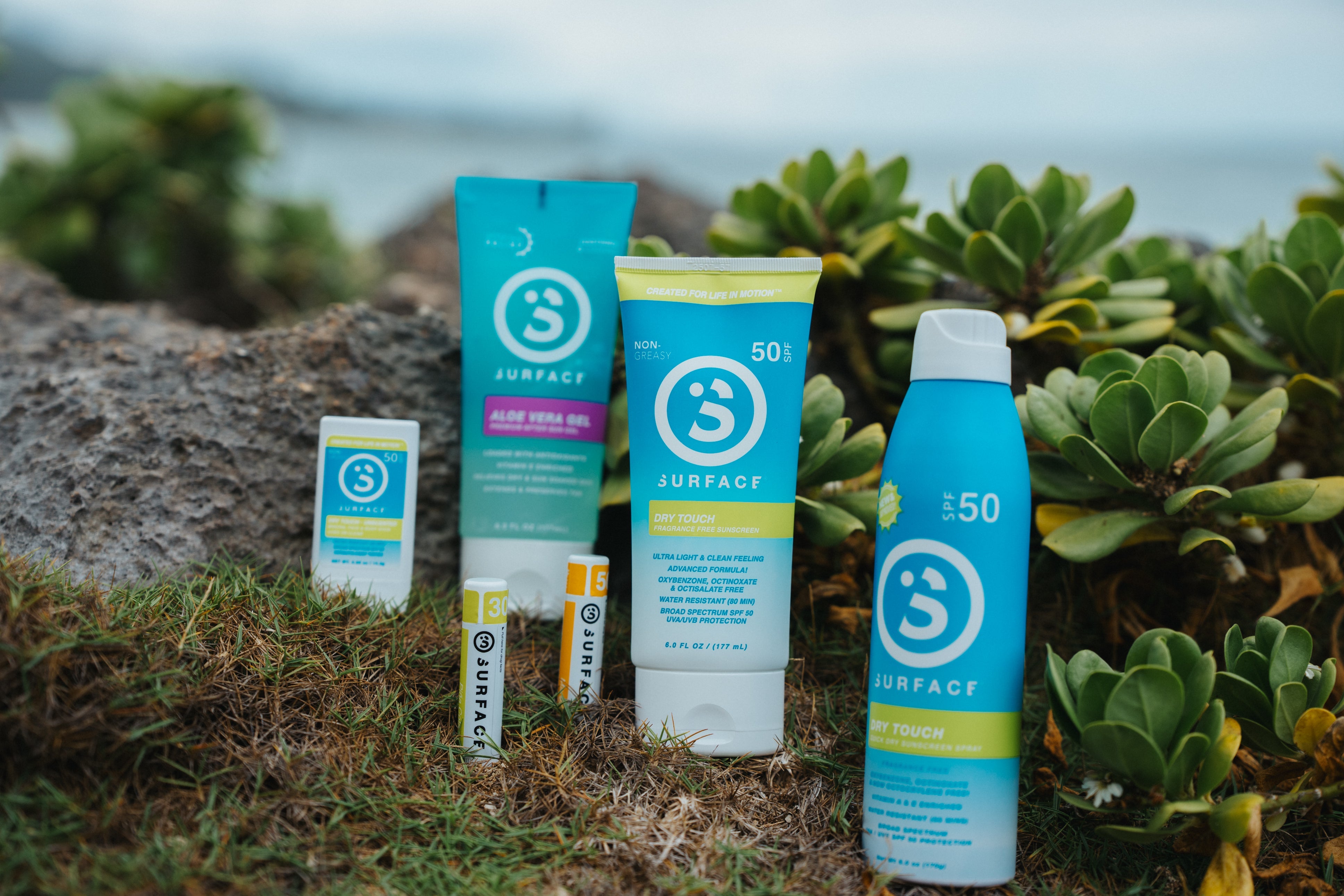
Protecting your skin should never feel like a compromise. Surface Sunscreen is thoughtfully formulated to provide broad-spectrum UVA and UVB protection while its formulas avoid unnecessary additives like oxybenzone, octinoxate, and microplastics.
Created for life in motion, Surface Sunscreen supports long-term skin health so you can enjoy the sun with confidence and peace of mind.

Vitamin D FAQs
Does Sunscreen block vitamin D production?
No. Studies show that consistent sunscreen use does not significantly reduce vitamin D levels for most people.
Can I still maintain healthy vitamin D levels while using Surface Sunscreen daily?
Yes. Everyday outdoor activity, along with diet and supplements when needed, allows most people to maintain healthy vitamin D levels even with daily use of Surface Sunscreen.
Does using a higher SPF Surface Sunscreen stop vitamin D production?
No. Higher SPF provides greater protection against sunburn and long-term skin damage, but it does not completely block vitamin D production under normal, real-world use.
Should I avoid sunscreen and just have unprotected sun exposure to get vitamin D?
No. Skipping sunscreen use increases the risk of sunburn, premature aging, and skin cancer. Surface Sunscreen helps protect your skin, while vitamin D can be safely supported through food, supplements, and normal daily sun exposure.
How does Surface Sunscreen support overall skin health?
Surface Sunscreen offers broad-spectrum UVA and UVB protection with products that have formulas that avoid unnecessary additives like oxybenzone, octinoxate, and microplastics. The result is sun protection you can feel good about using every day.
What foods can I eat to support healthy vitamin D levels?
Vitamin D can be supported through diet in addition to sun exposure. Foods that naturally contain or are fortified with vitamin D include fatty fish such as salmon, tuna, and mackerel, egg yolks, fortified milk, yogurt, cereal, and orange juice. Mushrooms are another helpful option, especially those exposed to UV light, since they naturally produce vitamin D. Including a mix of these foods can help support healthy vitamin D levels year round.