
The Best Sunscreen for Oily Skin: What to Look For

If you have oily skin, sunscreen can feel like a trade-off. Skip it, and you leave your skin exposed to UV damage. Wear the wrong one, and you spend the day shiny, slick, and worried about clogged pores.
The good news is that the trade-off is not real. The problem is almost never your sunscreen itself. It is the type of sunscreen. Oily skin does not need less sun protection. It needs the right texture and the right formula.
Here is what actually matters when choosing a sunscreen for oily skin, and how to find one you will genuinely want to wear every day.
Why Oily Skin Reacts Badly to the Wrong Sunscreen
Oily skin produces more sebum, the natural oil that keeps skin protected and hydrated. When a heavy sunscreen lands on top of that, two things happen. The skin looks and feels greasier, and thick or occlusive ingredients can sit over pores, trapping oil and debris underneath.
That combination is what leads to the shine, the slick feeling, and in some cases, the breakouts that people with oily skin associate with sunscreen.
The fix is not skipping sunscreen. UV exposure is a leading cause of premature aging and skin cancer, and oily skin is just as vulnerable as any other skin type. The fix is choosing a formula designed to protect without adding to the problem.
What to Look For in a Sunscreen for Oily Skin
A few specific qualities make a sunscreen work well on oily skin. When you are reading a label, look for the following.
Non-Comedogenic
This is the single most important term for oily and acne-prone skin. Non-comedogenic means the formula is designed not to clog pores. Clogged pores are what lead to blackheads and breakouts, so a non-comedogenic label is the baseline for any sunscreen going on oily skin.
Oil-Free
An oil-free formula will not add more oil to skin that already produces plenty. This helps with both the greasy feeling and the look of shine throughout the day.
A Lightweight, Fast-Absorbing Texture
Heavy, thick creams are the enemy of oily skin. A lightweight lotion, gel, or fast-absorbing formula sits comfortably on the skin and does not leave a slick film. The faster a sunscreen absorbs, the less time it spends feeling greasy.
A Matte or Dry Finish
This is where the texture of a sunscreen matters most for oily skin. A matte or dry-touch finish absorbs into the skin and leaves it feeling dry rather than slick. Dermatologists frequently recommend dry-finish sunscreens specifically for oily and combination skin because they control shine throughout the day.
Fragrance-Free
Added fragrance does not affect oil levels, but it is a common irritant. For skin that is also sensitive or breakout-prone, a fragrance-free formula reduces the chance of irritation.
Broad Spectrum, SPF 30 or Higher
None of the above matters if the sunscreen does not actually protect you. The American Academy of Dermatology recommends a broad-spectrum sunscreen with SPF 30 or higher that is water-resistant. Broad spectrum means it protects against both UVA and UVB rays. This standard applies to every skin type, oily included.

Mineral or Chemical Sunscreen for Oily Skin?
Both mineral and non-mineral sunscreens can work well on oily skin. The right choice depends on your skin's other needs.
Mineral sunscreens, which use zinc oxide, sit on top of the skin and are naturally gentle. Zinc oxide also has soothing properties, which makes mineral formulas a strong option for skin that is both oily and acne-prone, reactive, or easily irritated.
Non-mineral sunscreens tend to have a lighter, more weightless feel and absorb fully into the skin. Many people with very oily skin prefer this because it leaves no surface film at all.
Neither is better across the board. What matters far more than the mineral-versus-chemical question is the texture and finish. A lightweight, matte non-mineral sunscreen and a lightweight, matte mineral sunscreen will both serve oily skin well. For a deeper comparison of the two categories, see our guide to mineral versus non-mineral sunscreen.
Ingredients and Habits to Avoid With Oily Skin
A few things make oily skin worse, regardless of which sunscreen you choose.
- Heavy occlusive creams. Thick, rich formulas trap oil and heat against the skin. Save these for dry skin in winter, not oily skin in summer.
- Skipping sunscreen on shiny days. Oily skin still needs daily protection. Shine is not sun protection.
- Over-washing your face. Stripping oil too aggressively can cause the skin to produce even more. Gentle cleansing is better.
- Applying too little to avoid grease. Using less sunscreen than recommended lowers your actual SPF protection. The answer is a lighter formula, not a smaller amount.

How to Apply Sunscreen on Oily Skin
Technique matters as much as the formula. A few habits help oily skin stay protected and comfortable.
- Apply sunscreen to clean, dry skin as the last step of your skincare routine, before makeup.
- Use the full recommended amount. For the face, ears, and neck, that is about half a teaspoon, or three finger lengths.
- Let it absorb fully for a minute or two before applying makeup or going outside.
- Reapply every two hours, and after sweating or swimming. For reapplication over makeup or on the go, a spray or stick sunscreen is easier than a lotion.
- Blot, do not rub, if your skin gets shiny during the day. Rubbing can disturb the sunscreen layer.
For more detail on getting the amount right, see our guide on how much sunscreen to use.
Why Dry Touch Works for Oily Skin
Surface built the Dry Touch line around exactly the qualities that oily skin needs. A dry-touch finish is the specific texture dermatologists point to when recommending sunscreen for oily and combination skin.
The SPF 50 Dry Touch Sunscreen Lotion, available in 6 oz, 3 oz, and 1.5 oz sizes, is a lightweight, fast-absorbing broad-spectrum formula that dries down without a greasy film. The SPF 50 Dry Touch Continuous Spray 6 oz makes reapplication fast and easy during the day, with the same non-greasy finish.
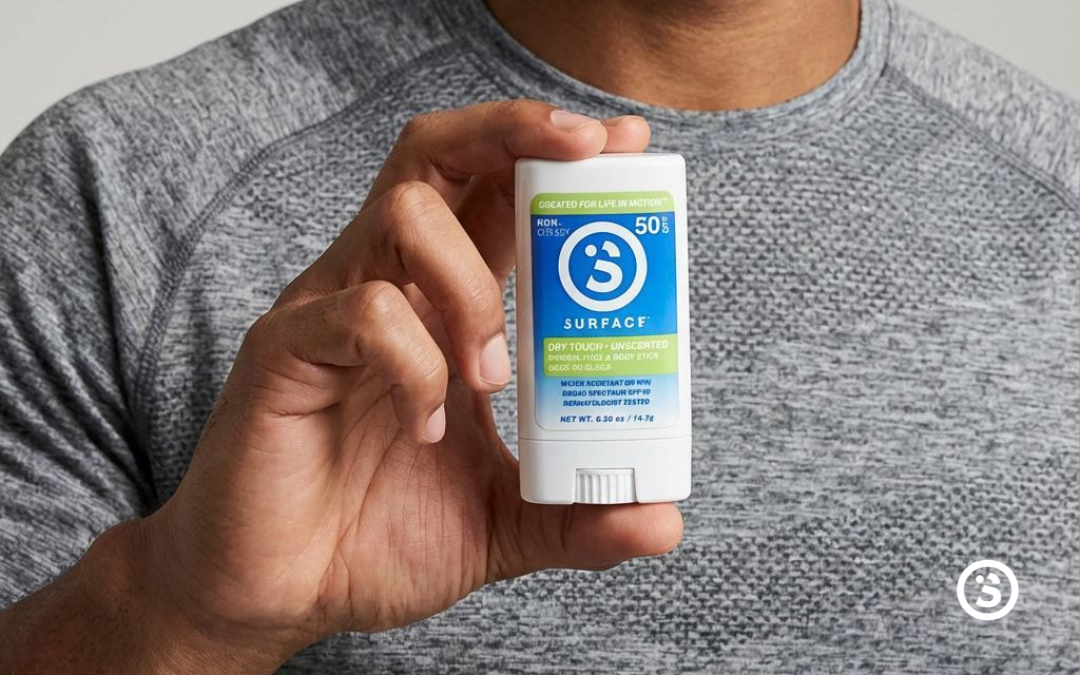
For the face, where oily skin is often most noticeable, the SPF 50 Dry Touch Face Stick gives you targeted, mess-free application with no need to rub a lotion in. If your skin is oily and also sensitive or breakout-prone, the Surface Mineral Face Sticks, available in white and tinted, use gentle zinc oxide for a soothing, lightweight option.
Every Surface formula is broad-spectrum, water-resistant for up to 80 minutes, reef-friendly, microplastic-free, and formulated without oxybenzone or octinoxate.
Sun Protection That Suits Oily Skin
Oily skin does not need to compromise on sun protection. It needs a sunscreen that respects its texture, with a lightweight, non-greasy, dry finish that protects without the shine.
The Surface Dry Touch collection was designed around exactly that, with broad-spectrum protection in a fast-absorbing, matte-finish formula. For oily skin that is also sensitive, the Mineral collection offers gentle, zinc-based options.
The best sunscreen for oily skin is the one that protects your skin and feels good enough to wear every single day.
Best Sunscreen for Oily Skin FAQs
What kind of sunscreen is best for oily skin?
The best sunscreen for oily skin is non-comedogenic, oil-free, lightweight, and has a matte or dry-touch finish. These qualities protect the skin without adding shine or clogging pores. Both mineral and non-mineral formulas can work as long as the texture is light and matte.
Does sunscreen make oily skin worse?
The wrong sunscreen can make oily skin look and feel greasier, but the right one will not. Heavy, occlusive creams are the problem. A lightweight, oil-free, non-comedogenic formula protects oily skin without adding to the shine or congestion.
Is mineral or chemical sunscreen better for oily skin?
Both can work well. Mineral sunscreen with zinc oxide is naturally soothing and a good choice for skin that is oily and also acne-prone or reactive. Non-mineral sunscreen often feels lighter and absorbs fully. Texture and finish matter more than the category itself.
What does non-comedogenic mean?
Non-comedogenic means a product is formulated not to clog pores. Clogged pores lead to blackheads and breakouts, so a non-comedogenic label is an important baseline when choosing any sunscreen for oily or acne-prone skin.
Can oily skin skip sunscreen?
No. Oily skin is just as vulnerable to UV damage, premature aging, and skin cancer as any other skin type. The natural oil your skin produces does not provide sun protection. Daily broad-spectrum sunscreen is essential regardless of skin type.
What SPF should oily skin use?
The American Academy of Dermatology recommends a broad-spectrum sunscreen with SPF 30 or higher for everyone, including people with oily skin. SPF level is about UV protection, not texture, so choose your SPF for protection and choose the formula for finish.
Why does my sunscreen make my face shiny?
A shiny finish usually means the sunscreen is too heavy or oil-based for your skin, or it has not fully absorbed. Switching to a lightweight, oil-free, matte or dry-touch formula and allowing it to absorb fully before going out will reduce shine.
Is a dry-touch sunscreen good for oily skin?
Yes. A dry-touch or matte-finish sunscreen is one of the best options for oily skin. It absorbs into the skin and leaves a dry, non-greasy feel, which helps control shine throughout the day while still delivering full UV protection.