
Mineral vs. Non-Mineral Sunscreen: Which One Should You Actually Be Using?

Most sunscreen conversations start with ingredients and end with confusion.
People are often told mineral sunscreen is “better” and non-mineral sunscreen is something to avoid. That framing misses what actually matters when you’re outside, sweating, reapplying, or trying to get sunscreen on quickly without interrupting what you’re doing.
The real difference isn’t about labels. It’s about how sunscreen performs in real use.
For Surface Sunscreen, the distinction is simple:
- Mineral sunscreen = controlled, surface-level protection using zinc oxide
- Non-mineral sunscreen = Dry Touch formulas designed for fast, invisible, no-residue performance
Both protect your skin. The difference is how easily you’ll use them consistently.
What Is Non-Mineral Sunscreen?
Non-mineral sunscreen, often referred to as “chemical sunscreen,” uses UV filters that absorb UV rays and convert them into heat, which is then released from the skin.
These formulas are designed to integrate into the skin rather than sit on top of it, which is why they tend to feel lighter, spread more easily, and leave little to no visible residue after application. This is also what allows for faster, more seamless coverage, especially when applying to larger areas of the body or reapplying throughout the day.
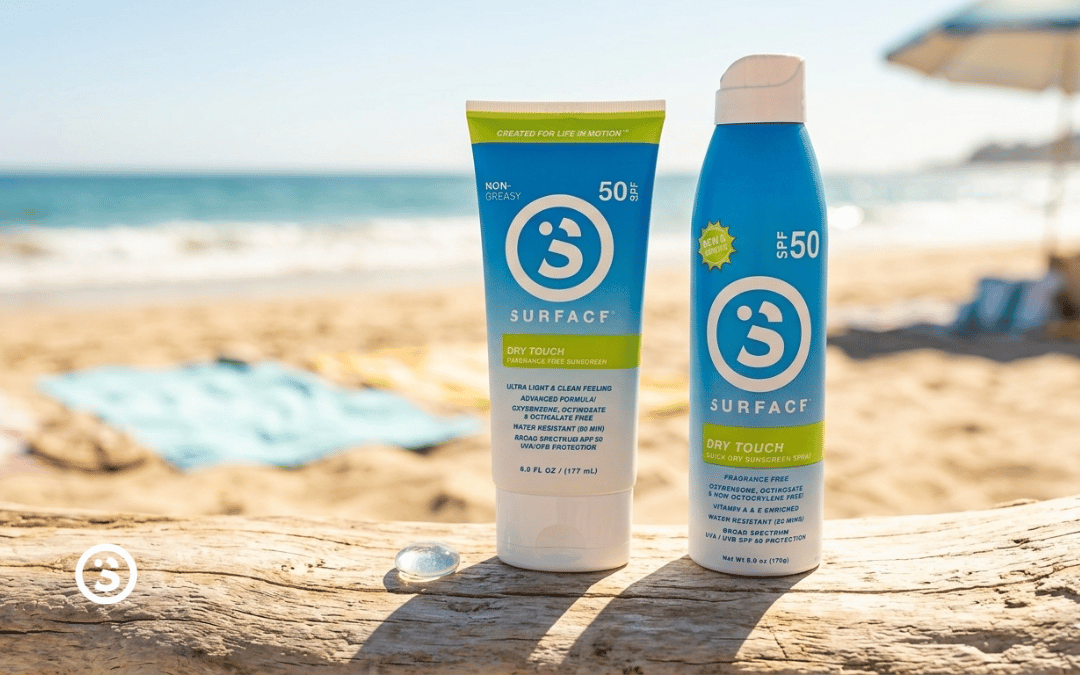
Surface Sunscreen’s non-mineral option is formulated as Dry Touch sunscreen, built around performance and ease of use.
What defines Surface Sunscreen’s Dry Touch sunscreen:
- Absorbs quickly into the skin with no visible residue
- Lightweight, non-greasy finish
- Designed to not interfere with grip, sweat, or movement
- Built for fast application and easy reapplication
Just as important, the formulation is built to meet modern safety and environmental standards:
- Microplastic-Free formulation
- Oxybenzone-free
- Octinoxate-free
- Reef-friendly
What this means in practice: You get effective UV protection in a formula that feels invisible on the skin and is easy to apply and reapply throughout the day without disrupting your routine.

What Is Mineral Sunscreen?
Mineral sunscreen uses active ingredients like zinc oxide to create a barrier on the surface of the skin that reflects UV rays. Because it stays on top of the skin rather than absorbing, it is often chosen for more controlled, targeted application, especially in areas where precision matters.
This surface-level approach is also why it is commonly used by people with sensitive skin, as well as for children, where a gentler, more predictable layer of protection is preferred.
Surface Sunscreen’s mineral formulas use non-nano zinc oxide, designed to remain on the skin’s surface rather than being absorbed.
How it behaves in real use:
- Starts working immediately after application
- Requires more intentional application to fully blend
- May leave a white cast, depending on formulation and skin tone
- Available in tinted options to improve blend and finish
Where it fits best:
- Facial application where precision matters
- Sensitive or reactive skin
- Children or anyone needing a gentler, surface-level option
- Situations where you want to see and control coverage
Mineral sunscreen is less about speed and more about control. It gives you a visible, surface-level layer you can place precisely where you need it, which is why it’s often the go-to for face application, sensitive skin, and children.
The Real Difference: How You Use Sunscreen
Most people don’t skip sunscreen because they don’t understand UV exposure. They skip it because they think that it’s inconvenient.
The real difference between mineral and other non-mineral sunscreens comes down to how much of an inconvenience each adds to your routine.
|
If a sunscreen is difficult to apply or uncomfortable to wear, you’re less likely to reapply it. That’s where performance starts to break down.

Performance Comes Down to Use, Not Category
When it comes to actual protection from the sun, both mineral and non-mineral sunscreens are designed to achieve the same outcome. The difference isn’t in what they protect against, but how consistently they’re used.
Both mineral and Dry Touch sunscreens from Surface are built to deliver:
- Broad spectrum UVA/UVB protection
- 80 minutes of water and sweat resistance
- Reef-conscious formulations (no oxybenzone or octinoxate)
- Micro-plastic free formulas
The difference isn't the protection level. It’s consistency.
A mineral sunscreen that isn’t applied evenly or reapplied won’t perform well.
A Dry Touch sunscreen that is applied and reapplied consistently will.
The most effective sunscreen is the one you actually use as directed.
When to Use Each Type of Sunscreen
Choosing the right type of sunscreen comes down to how and where you’re using it, not just the ingredients on the label.
Use mineral sunscreen when:
- You’re applying to your face
- Your skin is sensitive or reactive
- You want visible confirmation of coverage
Use Dry Touch sunscreen when:
- You’re active (golf, beach, hiking, sports)
- You need fast, no-hassle application
- You don’t want sunscreen affecting grip, sweat, or movement
- You’re reapplying throughout the day
Most people benefit from using both:
- Mineral for the face
- Dry Touch for everything else
Where Surface Sunscreen Fits In
Surface Sunscreen isn’t about taking sides in the mineral vs. non-mineral sunscreen debate. It’s built around solving the reasons people don’t use sunscreen consistently:
- Greasy feel
- Slow application
- Interruption during activity
- Skipping reapplication
Mineral formulas provide controlled, surface-level protection where precision matters. Dry Touch formulas make it so sunscreen becomes easy to use repeatedly.
Both are designed with the same priorities:
- Non-greasy performance
- 80-minute water and sweat resistance
- Reef-friendly formulation standards
Because protection only works if it’s used consistently.
Choosing between mineral and non-mineral sunscreen isn’t about picking a side. It’s about choosing the formula you’ll use consistently in the moments that matter.
Use mineral sunscreen when you want controlled, visible coverage, especially for your face or sensitive skin. Use Dry Touch sunscreen when you need speed, comfort, and easy reapplication during activity.
If you’re outside regularly, the most effective approach is using both. Mineral for precision. Dry Touch for everything else.
Because sunscreen only works when it’s applied, and reapplied, consistently.

Frequently Asked Questions
What is the difference between mineral and non-mineral sunscreen?
Mineral sunscreen sits on top of the skin and reflects UV rays, while non-mineral "chemical" sunscreen absorbs UV rays and converts them into heat.
What is Dry Touch sunscreen?
Surface Sunscreen’s Dry Touch sunscreen is a non-mineral sunscreen formula designed to absorb quickly, leave no greasy residue, and allow for fast, easy reapplication.
Does mineral sunscreen leave a white cast?
It can, especially with higher zinc oxide concentrations. Tinted formulas help reduce this effect and improve blending.
Which sunscreen is better for sports?
Both mineral sunscreens and Dry Touch sunscreens are used by athletes. They both offer 80 minutes of water and sweat resistant use. But, Dry Touch sunscreen is typically preferred for sports because it applies quickly, doesn’t interfere with grip, and is easier to reapply.
Is mineral sunscreen better for sensitive skin?
Mineral sunscreen is often preferred for sensitive or reactive skin because it sits on the surface rather than absorbing into the skin.
Do I need to reapply both types of sunscreen?
Yes. Both mineral and non-mineral sunscreens should be reapplied every two hours, or after swimming or sweating.
Can I use both mineral and non-mineral sunscreen together?
Yes. Many people use mineral sunscreen on the face and Dry Touch sunscreen on the body for better comfort and ease of use.