
How to Treat a Sunburn (And When to Worry)
You spent the day outside, came home with red shoulders, and now your skin feels hot and tight. What now?
A sunburn is your body's response to UV damage in the outer layer of your skin. According to the American Academy of Dermatology, about one in three Americans gets a sunburn each year, and most can be treated at home with a few simple steps. The faster you start, the more comfortable the next few days will be.
Here is what to do, what to avoid, and when a sunburn is serious enough to call a doctor.
What to Do First When You Notice a Sunburn
The single most important step is to stop the damage from getting worse. As soon as you notice a sunburn, get out of the sun. Move indoors or into full shade and cover the burned area with loose, lightweight clothing if you have to be outside.
From there, the AAD recommends the following for a sunburn:
1. Cool the Skin
Take a cool, not cold, bath or shower to bring the heat down. Keep the water gentle. Hot water makes the inflammation worse, and very cold water can shock irritated skin. Cool compresses, like a clean towel soaked in cool tap water, also work and can be applied for 10 to 15 minutes at a time.
When you get out, pat your skin dry. Do not rub.
2. Moisturize While Skin Is Still Damp
This is where most people miss a step. The AAD specifically recommends applying a moisturizer that contains aloe vera or soy while your skin is still slightly damp from the bath or shower. Damp skin holds moisturizer better, and the right ingredients soothe inflammation rather than just sitting on top of it.
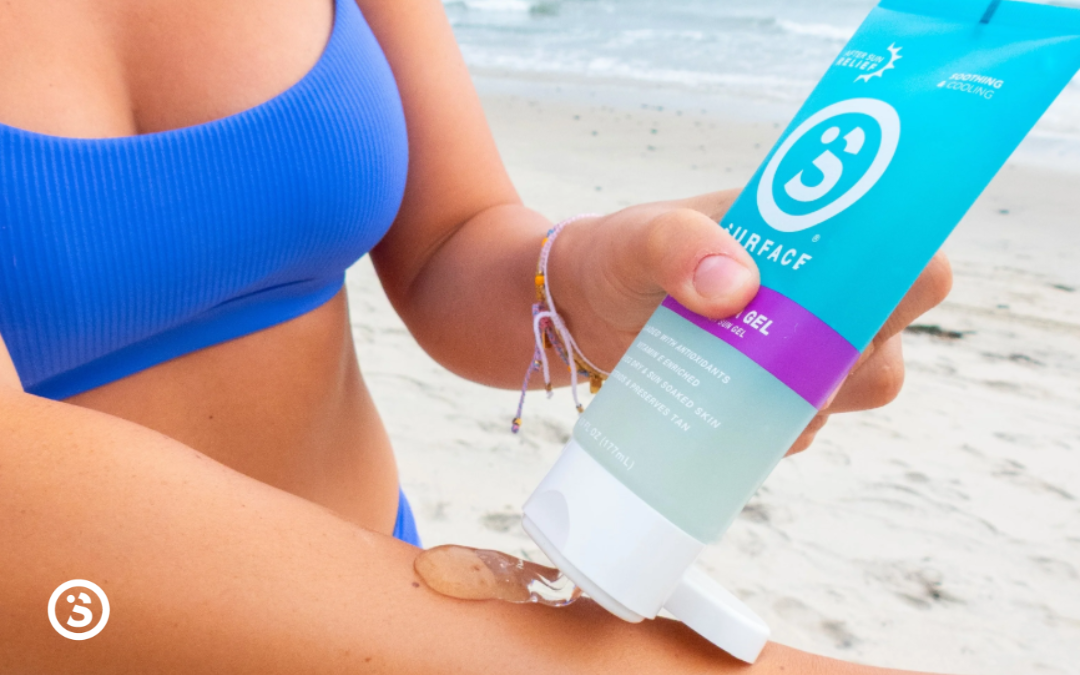
The Surface Aloe Vera After-Sun Gel 6 oz is formulated for exactly this kind of use. It is a light, cooling gel with aloe vera, vitamin E, and other plant-based ingredients that calm sunburned skin. For larger or harder-to-reach areas, the Aloe Vera After-Sun Continuous Spray covers the back, shoulders, and legs quickly without dragging across irritated skin.
Avoid heavy creams or ointments right after a sunburn on intact skin. These can trap heat against the skin and slow healing.
3. Drink Extra Water
A sunburn pulls fluid from the rest of your body to the surface of your skin, which can leave you mildly dehydrated. Drink more water than usual for the next day or two, especially if you also spent the day in the sun before noticing the burn.
4. Take an Anti-Inflammatory if Needed
For pain and swelling, the AAD and Mayo Clinic both recommend an over-the-counter anti-inflammatory like ibuprofen, taken as directed on the label. Aspirin or naproxen also work. These reduce both the discomfort and the underlying inflammation that drives a sunburn forward.
5. Leave Blisters Alone
If your sunburn blisters, do not pop them. A blister means you have a second-degree sunburn, and the skin over it is your body's natural bandage against infection. The AAD recommends keeping blisters clean and applying a thin layer of petroleum jelly to protect them while they heal. If a blister breaks on its own, gently clean the area with mild soap and water, then cover it lightly with a non-stick bandage.
6. Protect the Burn From Further Sun
Sunburned skin is much more vulnerable to additional UV damage. Until the burn fully heals, keep the area covered with clothing when you are outside, even on cloudy days. If you cannot cover it, apply a broad-spectrum SPF 30 or higher sunscreen, but do not consider sunscreen alone enough to protect healing skin.

What Not to Do
Some common sunburn "remedies" can actually make things worse. Skip the following:
- Ice or ice packs directly on skin. This can cause frostbite on top of the burn. Use cool, not freezing, compresses.
- Butter, mayonnaise, toothpaste, or vinegar. None of these have any clinical benefit, and several can irritate the skin further or trap heat.
- Numbing sprays with benzocaine or lidocaine. These can cause allergic reactions in sensitive skin. Aloe vera and ibuprofen are safer for most people.
- Scrubbing or exfoliating peeling skin. Once the burn starts to peel, let it shed on its own. Pulling at it can damage the new skin underneath.
- More sun, even tanning. Tanning over a sunburn does not heal it. It deepens the damage.
How Long Does a Sunburn Take to Heal?
Most mild sunburns resolve in three to seven days, according to dermatologists. More severe burns, especially ones with blistering, can take up to two weeks.
After the redness and swelling fade, your skin may start to peel. That is normal. It is your body shedding the damaged top layer to make room for new skin underneath. Keep moisturizing daily during this phase, and resist the urge to peel anything off manually.
When to See a Doctor for a Sunburn
Most sunburns can be treated at home. But certain symptoms call for medical attention. According to the Mayo Clinic, see a doctor right away if you experience:
- A fever over 103°F, especially with vomiting
- Severe blistering over a large area of the body
- Confusion, faintness, or dizziness
- Signs of dehydration, including extreme thirst, dark urine, or low urine output
- Signs of infection in a blistered area, such as increasing pain, swelling, redness, warmth, or pus
- Cold, clammy skin or rapid breathing
Sunburns that cause these symptoms may be second-degree burns and need professional care. Children, infants, and people with underlying health conditions should be seen sooner rather than later.
Why Sunburns Matter Beyond the Pain
Sunburn is not just about the next few uncomfortable days. The damage from each burn adds up, and research has linked multiple blistering sunburns earlier in life to a significantly higher risk of skin cancer later on.
Each sunburn is a sign that your skin took on more UV damage than it could repair. Preventing that damage is more effective and far less painful than treating it.
How to Prevent the Next Sunburn
The best sunburn treatment is the one you never have to use. The AAD recommends:
- A broad-spectrum sunscreen with SPF 30 or higher
- Application 15 minutes before going outside
- Reapplication every two hours, and immediately after swimming, sweating, or toweling off
- Roughly one ounce, or a shot glass full, to cover the body
- Sun-protective clothing, a wide-brimmed hat, and UV-rated sunglasses when possible
- Seeking shade between 10 a.m. and 4 p.m., when UV rays are strongest
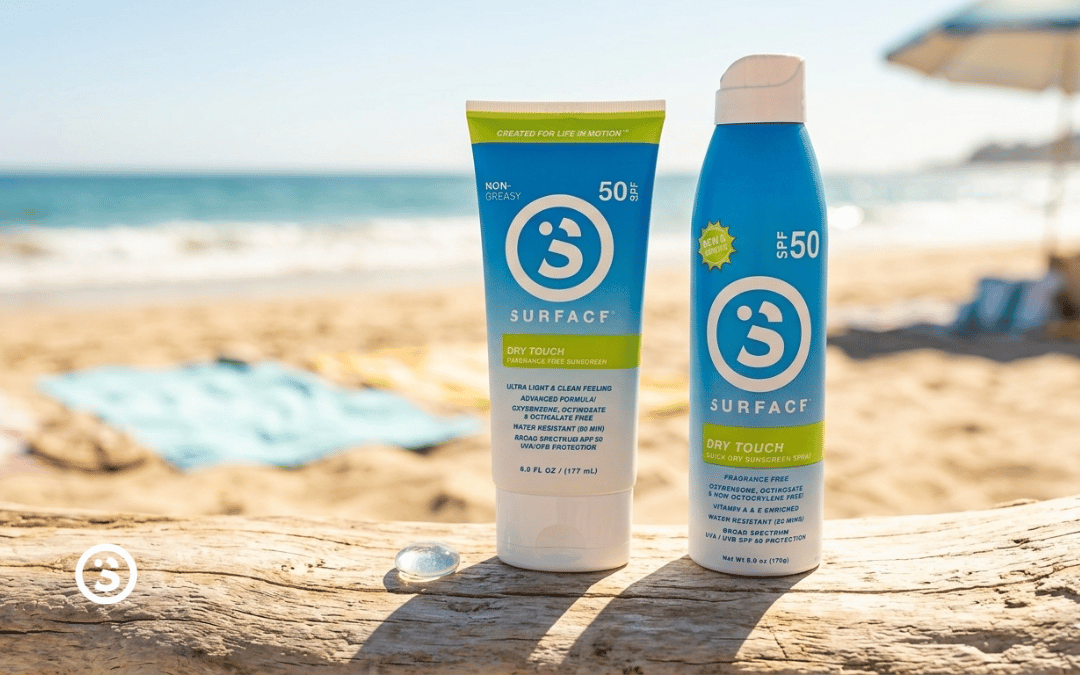
For everyday and active use, the Surface SPF 50 Dry Touch Sunscreen Lotion 6 oz and SPF 50 Dry Touch Continuous Spray 6 oz offer broad-spectrum protection that holds up for 80 minutes of water or sweat resistance, with a lightweight, non-greasy finish.
For more on getting the right amount of sunscreen on your skin in the first place, see our guide on how much sunscreen to use. And if you are not sure whether spray or lotion is the better choice for your day, our breakdown of spray sunscreen versus lotion walks through when each format works best.
Sun Care, Before and After
The best protection against sunburn is consistent, properly applied sunscreen. When a burn does happen, the right after-sun care can make the recovery faster and less painful.
The Surface Aloe Vera body care collection is built for exactly that, with cooling, plant-based formulas designed to soothe and hydrate sun-exposed skin. The Dry Touch sunscreen collection covers the prevention side, with broad-spectrum protection for everyday and active use.
Every Surface formula is reef friendly, microplastic free, and formulated without oxybenzone or octinoxate. Sun protection you can feel good about, before and after the burn.

Sunburn Treatment FAQs
What is the fastest way to heal a sunburn?
There is no way to truly speed up the body's healing process, but you can make it more comfortable and reduce inflammation. Cool baths, aloe vera-based moisturizer applied to damp skin, ibuprofen for pain and swelling, and extra water all help. Avoiding additional sun exposure is the single most important factor in how quickly the burn fades.
Should I put aloe vera on a sunburn?
Yes. The American Academy of Dermatology specifically recommends moisturizers containing aloe vera or soy for sunburn treatment. Aloe vera has natural soothing and anti-inflammatory properties that help calm the burn and support the skin's recovery.
Does putting ice on a sunburn help?
No. Ice or ice packs applied directly to a sunburn can cause frostbite on top of the existing burn, especially on already-irritated skin. Use cool, not freezing, compresses or a cool bath instead.
Why does my sunburn itch so badly?
As a sunburn heals, dry, damaged skin starts to peel and the underlying nerve endings can become more sensitive. This stage, sometimes called "hell's itch" when severe, is normal. Keep the area moisturized, take an antihistamine if needed, and resist scratching, which can break the skin and lead to infection.
Can you tan a sunburn?
No. A sunburn is a sign of skin damage. Continuing to expose burned skin to UV light deepens the damage and increases your risk of long-term harm, including skin cancer. Cover the burn and avoid the sun until it fully heals.
How can you tell if a sunburn is serious?
See a doctor if you have a fever over 103°F, widespread blistering, confusion, faintness, severe dehydration, or signs of infection. Most sunburns are first-degree burns and resolve within a week, but symptoms like these point to a more serious second-degree burn or other complications.
Is it normal for sunburned skin to peel?
Yes. Peeling is your body shedding damaged outer skin cells to make room for new, healthy skin underneath. Keep the area moisturized and let the skin shed on its own. Do not pull or scrub at peeling skin.
Can you prevent a sunburn from peeling?
Once a sunburn has formed, peeling is part of the healing process and cannot be fully prevented. You can reduce how much your skin peels by keeping it well-moisturized from the start, drinking plenty of water, and avoiding further sun exposure during recovery.