

Spray Sunscreen vs Lotion: Which One Actually Works Better?
Most people own both at some point. A lotion sunscreen that lives by the door for the morning routine, a spray sunscreen that lives in the beach bag for everything else. The two formats are often used interchangeably, but they do not protect equally in every situation.
The short answer is that both can protect your skin, but they do not protect equally in every situation. The difference is less about the formula inside the bottle and more about how the format affects the way people apply it. That distinction matters because the most effective sunscreen is the one that gets used correctly and consistently.
Here is what the research and real world use actually show about spray sunscreen versus lotion.
How Spray and Lotion Sunscreens Are Different
Both spray and lotion sunscreens are tested and regulated the same way. The SPF number on a spray means the same thing as the SPF number on a lotion when each is applied at the labeled rate.
The difference shows up in how each format is delivered to the skin.
Lotion is a thicker emulsion that you squeeze, dot, and rub in. You can see where it goes, and you can feel where you have already applied it. Coverage is mostly visible, and the dose you actually get on your skin is close to the dose you intended.
Spray sunscreen is a fine aerosol or pump mist that lands on the skin in a thin, even pass. Application is faster and more convenient, especially on backs, shoulders, kids in motion, and reapplication over sand or sweat. The trade off is that some of the spray drifts away in the air, some lands unevenly, and most people do not spray long enough to deliver a full dose.
Neither format is inherently weaker. The performance gap is almost entirely about application.

Is Spray Sunscreen As Effective As Lotion?
In controlled lab testing, spray sunscreens earn the same SPF as lotions when the same amount of product is applied to the skin. In real world use, multiple studies have found that people consistently apply less spray sunscreen than they think they are applying.
The most common issues with spray application are:
- Spraying for only one to two seconds per area instead of the recommended longer pass
- Holding the can too far from the skin
- Applying in wind, which carries product away
- Not rubbing the spray in after application
- Missing patches, especially on the back, shoulders, and tops of feet
When spray sunscreens are applied correctly, with a slow, even pass and a full rub in, they perform comparably to lotions. When they are applied quickly or in less than ideal conditions, the actual SPF on the skin can drop well below the number on the label.
Lotions are less forgiving of speed but more forgiving of technique. Even a rushed application of lotion tends to deliver more product per square inch than a rushed spray.
When Lotion Is the Better Choice
Lotion tends to be the more reliable option in a few specific situations.
Face and Sensitive Areas
Lotion gives you precise control around the eyes, nose, ears, and hairline. It also avoids the inhalation concerns that come with spraying near the face. For facial application, lotion or a stick is almost always the better tool.
First Application of the Day
Starting with a thorough lotion application gives you a strong base layer of protection. Many people use lotion for the initial application before heading outside, then switch to spray for reapplication later in the day.
Small Children
Lotion is generally preferred for young children because it is easier to control and avoids spraying near the face. It also gives you a clearer view of coverage on smaller areas of skin.
Windy Conditions
Beach days, boat days, and ski days often come with steady wind. Spray performance drops significantly in wind, while lotion application is unaffected.
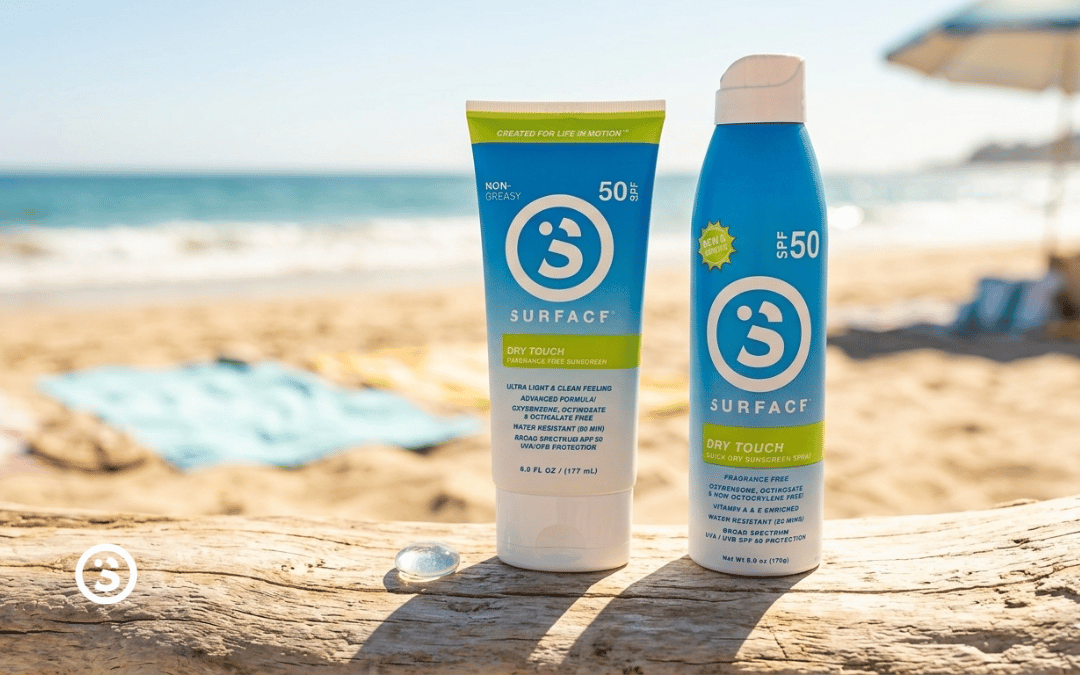
Surface offers lotion options like the SPF50 Dry Touch Sunscreen Lotion 6 oz for daily and active use, and the SPF50 Mineral Sunscreen Lotion 3 oz tinted for face application that needs both coverage and blendability.

When Spray Is the Better Choice
Spray has clear advantages in situations where convenience drives consistency.
Reapplication
This is where spray sunscreen shines. After two hours, after swimming, after sweating, spray makes reapplication faster and less likely to be skipped. A sunscreen that you actually reapply on schedule will outperform one you do not, regardless of format.
Hard to Reach Areas
Backs, shoulders, and the back of the neck are easier to cover with spray sunscreens, especially when you are applying sunscreen yourself.
Active Days
For surfing, golf, pickleball, hiking, and other activities where you need quick reapplication without breaking flow, spray is hard to beat. Surface designed the SPF50 Dry Touch Continuous Spray 6 oz for exactly this kind of use, with a fast absorbing finish that does not leave a greasy feel.
Kids in Motion
Once kids are old enough to stand still for a few seconds, spray can make reapplication realistic during a long day at the pool or beach. Apply away from the face, then rub in.
For mineral users, the SPF30 Mineral Sunscreen Spray 5 oz offers a non nano zinc oxide formula in a spray format, which is uncommon in the mineral sunscreen category and makes consistent reapplication much easier.
How to Apply Spray Sunscreen Correctly
Most of the gap between spray and lotion comes down to how spray is applied, and how much sunscreen you actually use. A few small changes make a significant difference.
- Hold the can about four to six inches from the skin
- Spray each area generously until the skin glistens
- Rub it in after spraying, just like you would with a lotion
- Apply in a sheltered spot when it is windy
- Never spray directly on the face. Spray onto your hands, then apply
- Reapply every two hours, or after swimming, sweating, or toweling off
The single biggest upgrade most people can make to their spray routine is rubbing it in. The spray itself is not the finished application. It is the delivery method.
The Real Difference Is Consistency
Both lotion and spray sunscreens can deliver excellent protection. The format you choose should match your day, not a strict rule about which is better.
A lotion that lives by your front door and goes on every morning will protect your skin better than a spray that stays in the beach bag and only comes out on vacation. A spray that you actually reapply every two hours will protect you better than a lotion you apply once at 9 a.m. and forget about by lunch.
This is the same principle behind every Surface formula. The most effective sunscreen is the one that fits your routine well enough to be used correctly, every time you need it.
Spray vs Lotion Sunscreen FAQs
Is spray sunscreen as effective as lotion?
Spray sunscreen can be just as effective as lotion when it is applied correctly and rubbed in. The challenge is that most people under apply spray, especially in wind or in a rush, which lowers the actual protection on the skin. Lotion is more forgiving of quick application because the dose is easier to see and control.
Why do dermatologists prefer lotion sunscreen?
Many dermatologists recommend lotion as the primary daily sunscreen because it delivers a more reliable dose and gives more control around the face. Spray is often recommended as a secondary product for reapplication and hard to reach areas. Both formats are FDA regulated and can meet the same SPF and broad spectrum standards.
Do you need to rub in spray sunscreen?
Yes. Rubbing in spray sunscreen helps ensure even coverage and full contact with the skin. Without rubbing in, some product can sit unevenly on the surface, miss patches, or wipe off on clothing before it sets. This is one of the most common application mistakes that lowers spray performance.
How long should you spray sunscreen on each area?
Most experts recommend spraying each area generously until the skin looks glistening, then rubbing it in. A single quick pass is rarely enough. For most adults, this means a longer spray than feels natural, especially on larger areas like the back, chest, and legs.
Can you use spray sunscreen on your face?
Spray sunscreen should not be applied directly to the face. Inhaling the aerosol is the main concern, along with the risk of spray reaching the eyes. The recommended approach is to spray into your hands, then apply to the face by hand. For daily face protection, a lotion or stick is usually a better choice.
Is spray sunscreen safe for kids?
Spray sunscreen is generally considered safe for older children when applied correctly, away from the face, and rubbed in. For very young children, lotion is typically preferred because it is easier to control and avoids any inhalation risk. Always apply spray in a well ventilated area.
Does spray sunscreen expire faster than lotion?
Both spray and lotion sunscreens have the same general shelf life, which is up to three years from the date of manufacture when stored properly. Heat and direct sunlight can shorten the life of either format. Always check the expiration date and the appearance of the product before use.
Which sunscreen format is best for sports and activities?
For sports and active days, the best sunscreen is the one that absorbs quickly, holds up to sweat, and is easy to reapply. Continuous sprays are popular for this reason. The Surface Dry Touch Continuous Spray was designed for exactly this kind of use, with broad spectrum protection, 80 minutes of water and sweat resistance, and a non greasy finish that does not interfere with grip or performance.
Sun Protection That Works for Your Day
Surface offers both spray and lotion sunscreens because real life calls for both. The Dry Touch collection includes a lightweight lotion and a continuous spray for active and everyday use. The Mineral collection includes a non nano zinc oxide spray and a tinted face lotion for sensitive skin and precise application.
Every Surface formula is reef friendly, microplastic free, and formulated without oxybenzone or octinoxate, so the format you choose never compromises the standard of what is going on your skin.
